

DATELINE: USA—FIRED UP: A Deeper Look at the Library Wars
Originally posted April 28, 2025
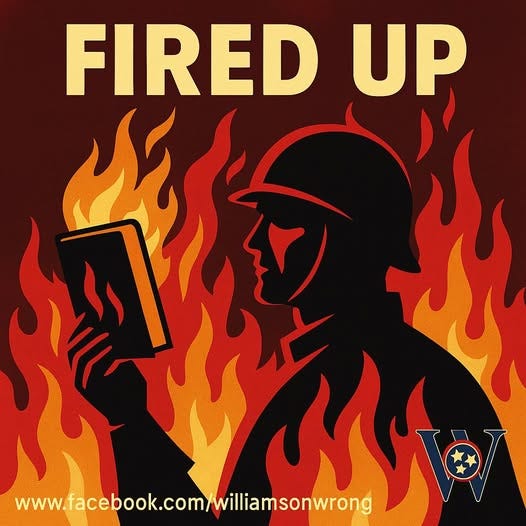
Preface: Why We’re Back on the Shelves
We first cracked open the library book battles in last Friday’s Final Flush — a quick hit on the chaos brewing between school boards, lawsuits, and some spectacularly bad timing on book purges.
But some stories deserve more than a few paragraphs. They deserve a fuller context.
Gentle reader, today’s edition runs a little longer — but we promise it’s worth every minute. Grab a cup of coffee, settle in, and give us five. You won’t regret it.
This deeper dive pulls the thread from: • Tennessee lawsuits to Pentagon censorship orders • Small-town panics to Supreme Court showdowns • Banned classics to kids caught in the crossfire
We’re turning the page — and giving this battle the full story it deserves.
⸻

Prologue: Welcome to the Subpoena Book Club
Once upon a time in Tennessee, we sued each other over library books. Again.
In July 2024, the Age-Appropriate Materials Act (AAMA) crept into law. It was supposed to keep school shelves “age-appropriate.” Instead, it turned every school board into a bad book club — the kind where nobody reads, everyone fights, and subpoenas are the party favors.
Williamson County got sued for moving too slow. The board yawned, a judge sighed, and December brought an emergency meeting: three books removed, two restricted, zero people satisfied.
Cue the usual suspects: progressive rage-posters, conservative lawsuit factories, and a thousand Facebook PhDs who hadn’t read the law or the books.
Meanwhile, librarians braced for impact, and students? They were too busy doomscrolling TikTok to notice the revolution happening in the reference section.
The real lesson? This was never about five books. It’s about whether grown adults can make policy without losing all sense of reason.
⸻

Chapter One: 145 Books, One Lawsuit
Rutherford County heard “age-appropriate” and responded like it was Spring Cleaning Day in a dystopian novel.
They yanked 145 titles — mostly books on race, trauma, and gender — flagged by a third-party site that thinks The Very Hungry Caterpillar is Marxist propaganda.
Librarians protested. The board ignored them 70% of the time. Because who needs experts when you have a color-coded outrage spreadsheet?
The ACLU and PEN America sued on April 16. Rightfully so. When you start banning Slaughterhouse-Five — a novel by an American soldier who survived the firebombing of Dresden — you’re not protecting kids. You’re protecting ignorance.
Author Brett Ortler put it best: "Good books lead to more reading. Bad bans lead to less thinking."
But sure, let’s honor WWII veterans by banning the guy who lived it. That tracks.
⸻

Chapter Two: Pentagon Paper Cuts
Think it’s just Tennessee? Cute.
Twelve military students and their families are suing the Department of Defense after the Pentagon decided basic biology, Black History Month, and anything rainbow-adjacent required immediate lockdown.
Thanks to a stack of executive orders, DoDEA schools stripped books, shelved Pride flags, canceled health classes, and pulled anything that smelled like “divisive concepts.”
(Which apparently includes puberty and American history.)
Parents were kept in the dark. Librarians were gagged. Students protesting censorship got disciplined, because nothing says “freedom” like banning Martin Luther King quotes.
⸻

Chapter Three: SCOTUS Preps Its Red Pen
Meanwhile, Mahmoud v. Taylor ticks away at the Supreme Court.
Religious parents want the constitutional right to opt their kids out of any book mentioning LGBTQ+ characters.
If they win, every district could be forced to build custom libraries for every offended parent with a megaphone.
If they lose, inclusive curricula might finally get real legal backing.
Either way, the red pens are poised, and common sense looks underdressed for the occasion.
⸻

Chapter Four: Meanwhile, in Sanity County…
Back in Williamson County, something radical happened: the school board actually adulted.
Instead of bans or bonfires, Williamson County Schools (WCS) introduced the Mature Materials List — an opt-in for parents.
You get a list. You say yes or no. No torches. No hashtags. No lawsuits over To Kill a Mockingbird.
And it wasn’t magic — it was leadership. WCS board member Claire Reeves read the law, read the room, and rebelled against the stupid.
While other counties set their libraries on fire, Williamson built a bridge.
⸻

Chapter Five: The Clause That Kills the Lawsuit
Hidden in Williamson’s new policy is a lawyer’s dream: a trapdoor.
If a judge ever strikes part of the policy down, it automatically self-destructs — no special meetings, no new lawsuits, no bills for taxpayers.
It’s the political version of “break glass in case of stupidity.”
Other districts should be taking notes. Or outright cheating off WCS's paper.
⸻

Chapter Six: Pick Your Ending
Here’s your multiple-choice quiz:
• Rutherford: Burned 145 books, bought a lawsuit, sold out its librarians.
• The Pentagon: Yanked puberty chapters and Civil Rights history off military bases.
• Williamson: Made a form. Gave parents a choice. Moved on.
The fight over books was never about literature. It’s about who gets to decide what kids are allowed to know — and who’s too scared to let them learn.
⸻

Epilogue: The Real Story
Here’s the good news for Williamson County:
Parents are empowered.
Books aren’t banned.
Students can get on with reading — and, you know, learning.
That’s the real win.
And if you’re still worried about what your kid might pick up in the library?
Maybe start by checking their TikTok feed.
Trust us — Fahrenheit 451 isn’t the thing melting their brains.